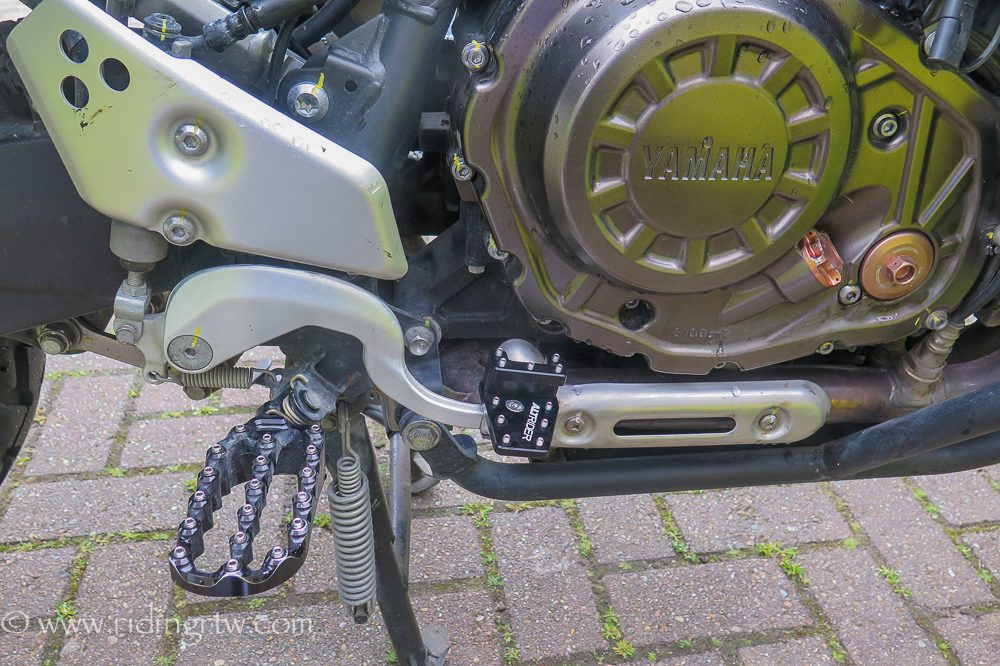
DR650’s BUILD FOR RTW – PART 1

The last time I owned a Suzuki was back in ’87 and it looked like this…

[IMG]

So a little learning curve, I find the easiest way to learn is to get greasy and oily and get the bike apart. As these are used motorcycles (two of them) they have been touched my untold amount of hands – factory, dealerships, pro mechanics, amateur mechanics, owners, friends etc. The big question you should always ask yourself is – did that person(s) have zero distractions when touching the bike…even the factory can make errors.

Easy way to find out is to take it apart as much as you feel comfortable…luckily I feel ok doing this so time to really jump in

Partially stripped

[IMG]

after both bikes were stripped I try and do the obvious things first, the known faults, areas of the bike that regardless of what mods you do they will not change, like neck and swingarm bearings, cleaned/ checked/ greased

stock crud!!!

[IMG]

[IMG]

[IMG]

Brake lines, usually good for around 4 years, stock rubber ones are just average at best, DR riders were doing a deal on Galfer brake lines a while back, buy a front at 20% off and get a rear for free, score…I requested +2″ on the fronts because I’ll be adding risers and steering dampers.

[IMG]

Brake fluid is somewhat hygroscopic (tending to absorb moisture from the air) soa quick rebuild to make sure everything is good and then a full brake fluid flush NOT just a case of drain it out, clean and add new fluid!

I use a Snap-on vacuum bleeder that pulls with the required pressure to get all the bad stuff out and I run thru about an equivalent of a double what the system takes or until the fluid coming thru is crystal clear. The front master cylinder looks like the brake fluid hasn’t ever been touched for a long time if ever.

[IMG]

Next up the famed NSU loose screw issue. When I first read this I found it strange but I read it so many times it was hard to ignore, its a very simple job with the right tool that costs a huge $16.50 the EBC CT024, I have a few of these and they all kind of look the same but believe me they aren’t. The right one makes the clutch pack removal a few minute job

[IMG]

[IMG]

I put the driver on the first allen bolt holding the NSU unit in place and what felt like no pressure it came undone, as I undid it wet blue RTV silicone came out of the hole

[IMG]

I drilled it for safety wire, added some blue Loctite and cleaned the hole and replaced it.

[IMG]

do you see the blue on my finger, someone had used RTV (guessing) to hold it in and as its in a hot area and in oil it never set. It could have worked if the motor had been cold and left open for 24 hours I guess but not the right way to do it…I’d be pointing the finger at one of the numerous Suzuki mechanics that have seen the inside of this thing, clueless!!!

[IMG]

So I thought I’d do a quick video of the next screw I undid and watch this closely if I added any pressure to the handle of the tool you’d see my skin tighten because of excessive grip…IT DOESN’T, if you are putting off checking the NSU screws maybe this will put a fire under your ass…THREE out of FOUR screws were barely snugged tight on both bikes, the tightest of all was the one with RTV, the other 3 didn’t have anything on them.


Loose NSU fasteners VIDEO LINK

if you watched that are saying it looked pretty tight to me, then maybe you should read an article I wrote and watch the test video included – HERE

This is the point I was making about continuity, did the guys phone ring as he was doing this, was he distracted – who knows but he had one job to do and he failed, from this point forward we’ll call the mechanic who worked on this bike Dick Smith, his other inventions didn’t do so good so he became a Suzuki mechanic!!!

[IMG]


A stark history lesson in Italy, Spain and France…and some amazing riding

On the south coast of Sicily, which I was corrected in pronunciation by the locals who call it ‘See-chill-ya’, we headed to the most important town in Greece…what!!!

Yes we are still in Italy but if you know your history a lot of this part of the world at one time or another was Greek, we headed to Agrigento or as it was also known – Akragas, Acragas, Ἀκράγας in Greek, Agrigentum in Latin and Kirkent or Jirjent in Arabic, one of the leading cities of Magna Graecia during the golden age of Ancient Greece with population estimates in the range of 200,000 to 800,000 before 406 BC.

We stayed in the new city which is a maze of little streets

[IMG]

[IMG]

…but the old city is a little further down the hillside and looked on by the new city

[IMG]

It is so clean it almost looks like a movie set

[IMG]

large structures in various state of repair dot the hillside

[IMG]

[IMG]

the ruins are in very good shape and guarded very well, only a few years back this was not a tourist location and the ruins were open to anyone, luckily no damage has happened

[IMG]

just some small/ life size statue right? Wrong!

[IMG]

[IMG]

We ride on where the modern world is elevated with Italian style above the ancient world

[IMG]

We decided not to head to the city (Palermo) and instead chose Marsala, a small town with a distinctly Arab/ North African feel, again with tight little streets and distressed buildings

[IMG]

Of course as expected beautiful buildings and town square abound which is surprising as this town was all but wiped off the map during world war 2

[IMG]

[IMG]

Into the harbor in Palermo and THE LAST vehicle we see could not be more iconic to Sicily, well the name is anyway…wonder if it was full of Teflon :jack Some of you might need a little google help to get the joke :hmmmmm

[IMG]

We head for Sardinia, its an island I knew absolutly nothing about, we know we have a very short time there we are literally riding end to end to catch a ferry to Spain, @EvergreenE has to fly back to Lithuania in about a week to finalize her South American book deal with editors, publishers and printers.

As soon as we docked we knew we were going to regret not having enough time here. We spent a very short, few days riding some of the most amazing (empty) roads we had seen throughout the whole of Europe and we had to race along.

We stopped on one road for a break and looked down and there is this bridge and it looked like something out of fairytale…so I really gave it that look to just to enhance the feeling. Can you imagine being on a dirt bike and following that deserted rail track?

[IMG]

The island is lush, green, mountainous and scattered with dirt tracks as far as the eye can see…a return trip here on a dirt bike is an absolute must and a few months could easily be spent in the mountains, but for now we are stuck with pavement.

Looking down on valleys paved roads are few and far between but there is dirt down there…loads of it.

[IMG]

[IMG]

[IMG]

[IMG]

[IMG]

[IMG]

When we arrived to Sardinia our ferry was late and we arrived in the dark = one day missed, when we are leaving we have an early ferry and we were told to be at the dock at 4.30am = another day missed…but that ferry was two hours late arriving!!!

We were stuck with boring roads like this…

[IMG]

If you are heading to Europe or in Europe and have never been to Sardinia from what we saw I can tell you it’s amazing and not to be missed, just slightly smaller than Vermont for reference

The last day we went for an evening ride from Porto Torres (where the ferry leaves from) to what was described as Sardinias best tourist attraction – Grotta di Nettuno or Neptunes Cave. It was abandonded, and looked to have been for years…guess I read an old magazine. :fpalm

Anyhow when life gives you lemons…blah, blah, blah…you find this to look at

[IMG]

and this…

[IMG]

and a sunset on a cliff so windy you need to keep your helmet on

[IMG]

[IMG]

Looking towards Spain, just 14 short hours away on a ferry at 4.30am :snore

[IMG]

The ferry arrived very late into Barcelona, Spain due to high winds and rough seas. As mentioned earlier Egle had a flight to catch to go home to finalize a book so we only literally had 36 hours in Spain together.

As we aren’t big city people and also traveled a lot in Spain we decided to take a ride to see something unique. Heading due west out of Barcelona a few miles south of Zaragosa is a little town of Belchite.

To get there its all good riding thru Catalan

[IMG]

[IMG]

[IMG]

I’d heard about Belchite from a member on the XT660.com forum that I used to frequent when I was riding one. He shared photos of his bike riding down the main street and it looked like a good photo opportunity and a chance to get away from Barcelona for the night.

Why Belchite???

Between August 24 and September 7, 1937, loyalist Spanish Republican and rebel General Franco’s forces in the Spanish Civil War fought the Battle of Belchite in and around the town. After 1939 a new village of Belchite was built adjacent to the ruins of the old, which remain a ghost town as a memorial to the war.

The remains of the old village have been used as filming locations in films including Terry Gilliam’s 1988 film The Adventures of Baron Munchausen and Guillermo Del Toro’s Pan’s Labyrinth.

[IMG]

[IMG]

The town was fenced off which went against the photos I’d seen years earlier, eventually, we found the big door leading into the old village. Just as we got there a group was leaving and the ‘only guide’ told us it was now closed, but it would be open at 9pm, but there is no lighting at all, photographers are advised to bring their own flood lights…fail!!!

[IMG]

Otherwise he told us to come back the next day, but just in case also let me walk in a few steps to take a few photos…

[IMG]

[IMG]

[IMG]

Sadly the next day it was torrential rain, so photography was a no go so we headed back to Barcelona almost the whole way in the rain.

After dropping Egle at Barcelona airport early in the morning while it was still dark I head off north in the direction of England, I have a few days to get there and arrive before my sister leaves for her vacation, to get amongst other things the keys for her house.

I pick a reasonably direct route with a few stopovers at two friends houses for overnighters, and an Airbnb in the middle

I have never been really bothered by the weather, hot or cold I usually wear about the same amount of gear, so I head for the easiest way and I leave the metropolis of Barcelona in the dark behind me. My route takes me into the Pyrenees Mountains dividing Spain and France, and as its early in the morning as the sun is rising the skiers are appearing and surprised to see a motorcycle riding past.

[IMG]

I stay off the toll roads and this takes me thru lots of little towns, villages, and backroads once I have left the mountains

[IMG]

[IMG]

[IMG]

After spending the night at MrPopples I leave in the strongest wind I have ridden in since Patagonia in 2011, I’m getting blown from one side of the road to the other for the whole day.

Taking a break at a little village I was advised as a must see Saint-Cirq Lapopie. Sitting 300 feet up on a high cliff face above the Lot River doesn’t seem real as it comes into view. It was recently voted the best village in France and because of this it gets around 400,000 visitors a year (mainly French) but today I was the only person there. In 1199 Richard the Lionheart tried to siege the village and couldn’t get in…today the Super Tenere conquered the village and got in straight away.

[IMG]

[IMG]

As I said earlier not the best day weather wise and very small streets from Medieval times are not made for vehicles so I had a walk around its tiny streets and alleyways

[IMG]

[IMG]

[IMG]

[IMG]

If you are wondering why these shots are so edited? This next shot will show you why, it was taken in nearly total darkness as were most of the others in the village (original unedited is first) and moments later the torrential rain that had been threatening happened

SCL.jpg

[IMG]

I took off and headed further along high above the river and eventually outran the rain

[IMG]

I carry on riding north and the History of France gets a little deeper, I’m keeping to back roads and the occasional short hit of dirt

[IMG]

[IMG]

[IMG]

@Yannick had pm’d me and said that as I was heading north maybe I should stop by D’Oardour-Sur-Glane and take in a little World War 2 history.

I did a little research and found this line, so now you know as much as me – “On 10 June 1944, the village of Oradour-Sur-Glane in Haute-Vienne in then Nazi-occupied France was destroyed, when 642 of its inhabitants, including women and children, were massacred by a Nazi Waffen-SS company. A new village was built nearby after the war, but French president Charles de Gaulle ordered the original maintained as a permanent memorial and museum.” – If you want to read more a brief history is HERE

I arrived at 4.30 (16.30) and according to the sign it should be open but the gates were closed. A lady came out and in broken English told me they were still open but closing soon, I could come in and she would leave the main gate slightly open so I could stay as long as I wanted and walk around have the place to myself to take some photos, just close the gate when you leave. She asked if I would like her to point out some areas that maybe I wouldn’t know about if I was by myself. I nodded in agreement and we walked.

[IMG]

As we walked up the main street of the village it seemed like a movie set and I just let her speak…”did you notice the date, it was 4 days after D Day, 6th June 1944?” She went on, it was strange because this village had never seen a Geman soldier until 1942 even though Limoge just 14 miles south was overrun with the German army and then visits were very rare and village life carried on as normal.” As she walked she pointed out building and was saying “this is Mr. xxx house, this was the bakery, this was the butcher…” the way she spoke it felt like she knew them personally but not possible as she was in her forties.

[IMG]

[IMG]

[IMG]

[IMG]

[IMG]

[IMG]

[IMG]

[IMG]

[IMG]

The photo above is the main intersection of the village, “all the inhabitants were brought here, women and children were sent to one side and men to the other”, she explained. “The women and children were marched just down the road to the church and 452 were forced inside”

[IMG]

There were only a few shots fired in the church but no-one was killed, they were locked inside.

The men were split into four groups and made to go inside buildings a good distance from each other, she pointed at a sign on the remains of the building. “This is where one group of men were massacred.

[IMG]

She pointed up the street, “and there, there and there were the other three places the massacre took place”.

[IMG]
We went back to the church and I was speechless, literally, my throat was dry and she knew it. She made it a very real experience but it was going to get a little more real. We reentered the church, “can you imagine you are inside one of 452 women and children and just heard lots of shouting then gunfire, then nothing, as a women, inside here you know that your husband, father, brother, uncle or son was now dead and you were trapped”

We stood inside the church and she said, “you are in here, terrified and then gunfire and windows smash and hand grenades and incendiary devices come flying in, the inside of the church becomes an inferno in a matter of seconds and you are trapped with no chance of escape.” Look here, she points to the wall, “do you see the color pink in the granite?”

[IMG]

“You see near the roof line where the granite has a natural color, well for granite to turn pink…” she walks to a wall, “it needs to be heated up to”. She puts her finger on the wall and draws 1100. “This is hard to imagine, but we know this as it has been tested, and we know exactly what happened that day because amazingly two women and one child escaped. The only survivor was 47-year-old Marguerite Rouffanche. She escaped through a rear sacristy window, followed by a young woman and child. All three were shot, two of them fatally. Rouffanche crawled to some pea bushes and remained hidden overnight until she was found and rescued the next morning.”

She went on to say, “after the massacre, the village was razed to the ground and is now left in almost the exact same condition it was that day back in 1944.”

We walked out the church and she locked the door behind us. “Make sure you get a photograph of that car, people think it’s Dr. Jacques Desourteaux car…but it actually isn’t, a lot of people are mistaken. When Dr. Desourteaux arrived at the entrance to the town, soldiers forced him to drive up the main street and stop across from the marketplace, where he joined the assembled townspeople. He died with the others that afternoon. A few weeks later, the doctor’s brother and his nephew moved the Desourteaux car to the family property, where it still lies inside the garden wall. The car on the marketplace actually belonged to the wine merchant…I’ll leave you with your thoughts” and she walked away.

[IMG]

I walked around a little more taking it all in, over the years I have traveled thru a lot of countries and history is everywhere, in Europe it is in your face a lot and well preserved and you can become a little blazé about it all as it doesn’t quite often seem real. If I was here alone it would have felt like a movie set with no depth, but with a local showing me around and explaining all the intricate details, made this, without doubt, one of the most humbling places I have ever experienced.

[IMG]

Are long-term adventure motorcyclists the ultimate minimalists?

Are long-term adventure motorcyclists the ultimate minimalists?


This isn’t a piece about small bike vs big bike, that decision is entirely yours – this is just another way to look at it if you are on the fence about what Adventure Motorcycling possibly is or isn’t and where you can get to or not get to…


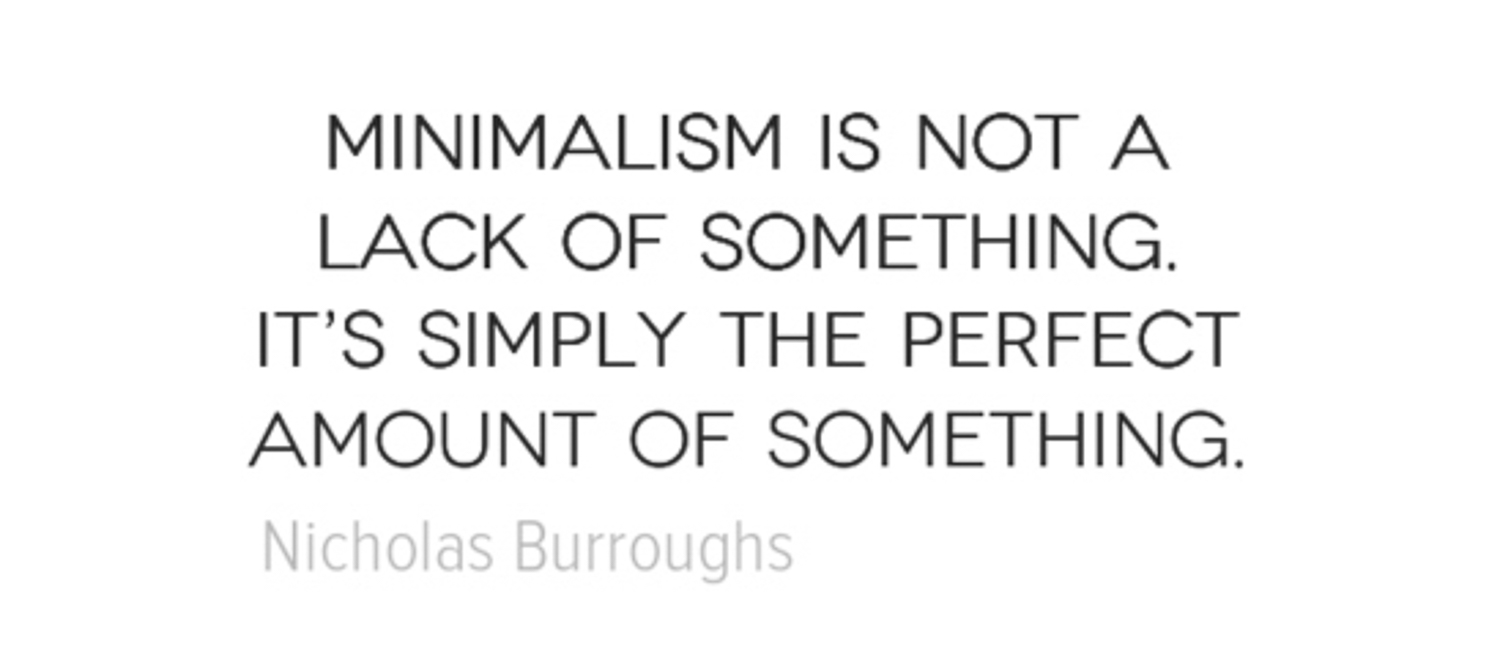
Having some spare time I have been reading about minimalism and wonder how it could be integrated into Adventure Motorcycling. Think of it as an alternative way to look at your set up ‘before you head out’ on that big trip. At absolute worse it may help you pack a little less.

It’s obvious that some don’t understand ‘less is more’ when it comes to riding and travel when some bikes are packed to excess – we’ve all seen the photos

This got me asking myself a question, if less is more and it can potentially make an adventure even more of an adventure why don’t more riders do it and embrace the minimalist lifestyle on the road…have a read and see what you think and then ask yourself some questions about your rational and your set up for what you want your adventure to be.

When I was thinking about this I was actually thinking of trips at a minimum of three months, but longer trips will make a lot more sense of what you’ll read below.

Less is more – do you pack for every eventuality?

Less is more – can you pick your bike up by yourself?

Less is more – does the size of your motorcycle determine where you go?

Less is more – do you like to fill up more than once a day?

Reading an article about minimalism, which then linked to something else and then something else you know when you get in that spiral and find yourself on a page that you weren’t expecting to find?


Ever happened to you, well it happened to me!


I landed on a page about minimalism (that had NOTHING to do with motorcycling) and a list of 25 reasons why you might be a minimalist. Something I’d honestly never even considered, but when I read the list and could relate to so many of the points as a long term rider with over 400,000km under his belt RTW it got me thinking.

Lightweight adventure riders are basically traveling minimalists just taking what is required to get the job done and survive. Every single thing that is required to live life to the fullest is on the bike. If anything is missing it is sourced when required.

On the other hand, the riders on the big behemoth bikes (I’ve done both so I can comment) have everything and more on the bike, don’t expect to have to buy a single thing besides fuel and food for the whole trip.

For me, every subsequent trip I take less as I learn more about what I need and don’t need regardless of the length of the trip.

So, the question is – if you were a minimalist adventure rider –  would you have MORE of an adventure.

Read the following list (again NOT motorcycle related but can be adapted) and see how you score and can relate to the 25 Reasons You Might be a Minimalist


  1. If you have an empty attic or storage shed, you might be a minimalist.
  1. If you are debt-free or paying off debt with gazelle intensity, you might be a minimalist.
  1. If walking through Target or Wal-Mart makes you really uncomfortable, you might be a minimalist. 
  1. If your children are mad at you because you canceled the cable, you might be a minimalist.
  1. If you can’t stop giving stuff away, and your dog is worried that he’s next, you might be a minimalist.
  1. If a friend asks you to go shopping, and you would rather go to the dentist, you might be a minimalist.
  1. If you don’t want your parents to stop by your yard sale, because you are selling their stuff too, you might be a minimalist.
  1. If you don’t have a junk drawer, you might be a minimalist.
  1. If you have more free time than ever before, you might be a minimalist.
  1. If you have ever used a car share service, you might be a minimalist.
  1. If you are curious about living with less than 100 things, you might be a minimalist.
  1. If clutter makes you crazy, you might be a minimalist.
  1. If you follow less than 100 people on Twitter, or 100 friends on Facebook, you might be a minimalist.
  1. If you vote with your dollars, you might be a minimalist.
  1. If people who can fit all of their belongings in a backpack inspire you, you might be a minimalist.
  1. If you schedule time for nothing, you might be a minimalist.
  1. If you nap, you might be a minimalist.
  1. If you read a book, and then give it away, you might be a minimalist.
  1. If you want to have a packing party, you might be a minimalist.
  1. If words like trinket and souvenir make you cringe, you might be a minimalist.
  1. If you’ve thought about living in a tiny house, you might be a minimalist.
  1. If there are less than 33 things in your closet, you might be a minimalist.
  1. If you spend more time thinking of ways to reduce your overhead than ways to make money, you might be a minimalist.
  1. If you have more resources (time, talent, treasure) to give, you might be a minimalist.

Last, but not least….

  1. If you would rather spend a day with Leo Babauta instead of Oprah Winfrey, you might be a minimalist.

Maybe you agree with some of these statements or think some are silly. With all of the misconceptions about minimalism, it can be confusing to see how it might apply to your life. You might be a minimalist, or maybe you’re just happier living with less. Then again, what’s the difference?

I personally can say that 21 of 25 from the list I would put a check mark by. And years on the road have helped but also some of those 21 have kept me on the road longer than most.

Why would this help you as an adventure rider? Here are those four questions I asked at the start, but now they are numbered. If you answer YES to any or all of these you might be having a negative affect on your own adventure without really realizing it –

  1. Less is more – do you pack for every eventuality?
  2. Less is more – can you pick your bike up by yourself?
  3. Less is more – does the size of your motorcycle determine where you go?
  4. Less is more – do you like to fill up more than once a day?

Number 1. If you pack less, its is obvious you have spent less because you have less, therefore it means more money in your pocket, which means a longer adventure.

Number 2. That crazy dirt road you pass that looks interesting but on a big bike you might just have to tell yourself no. No, because if you are alone it’s an unknown and if you get in trouble who knows if or when someone would find you stranded with a dropped bike, or worse an injury because coming off your heavy bike has physically hurt you. If your bike goes into a ditch with handlebars down/ wheels up, are you stuck if you are solo? Can you drop your bike 10-15 times a day and pick it up, can you do that day after day…in sand/ mud/ bulldust/ pea gravel/ altitude etc. If the answer is no then are you really riding an adventure bike or just a bike that the manufacturer said was an adventure bike…did you just find out your were sold on advertising and maybe a sport tourer would have been just as good and probably cost you less?

Number 3. Big bikes are great but once you leave the first world countries you are shoving your wealth in people faces, you are less likely to be welcomed with open arms. You are more likely to be looked at like an alien, or a cash machine. Only the very, very best of riders can ride a big bike on a consistent basis offroad day after day. Adventure, I mean real adventure isn’t on a paved road is it?

Number 4. Fuel, I hear some riders filling up more than once a day, you’re not giving yourself chance to immerse in the cultures you have created this once in a lifetime chance to come to see (if that’s your goal) you are just riding. If you are filling up more than once a day then there is a very good chance you are riding mainly on pavement. Ride less distance, 200km a day is a lot – leave late, arrive early, travel slowly, spend less, which in turn means – more travel and adventure.

My conclusion which I actually realized months ago if not years ago, is after a year and a half back on a big loaded bike 265kg/ 585lbs I’m done with it, I am going smaller and lighter with both bike and luggage and going back to being a motorcycling minimalist and seek out more adventure and ride to more remote locations


The new set-up is coming in the next few weeks, stay tuned.


My bike rattles itself apart! What can I do?

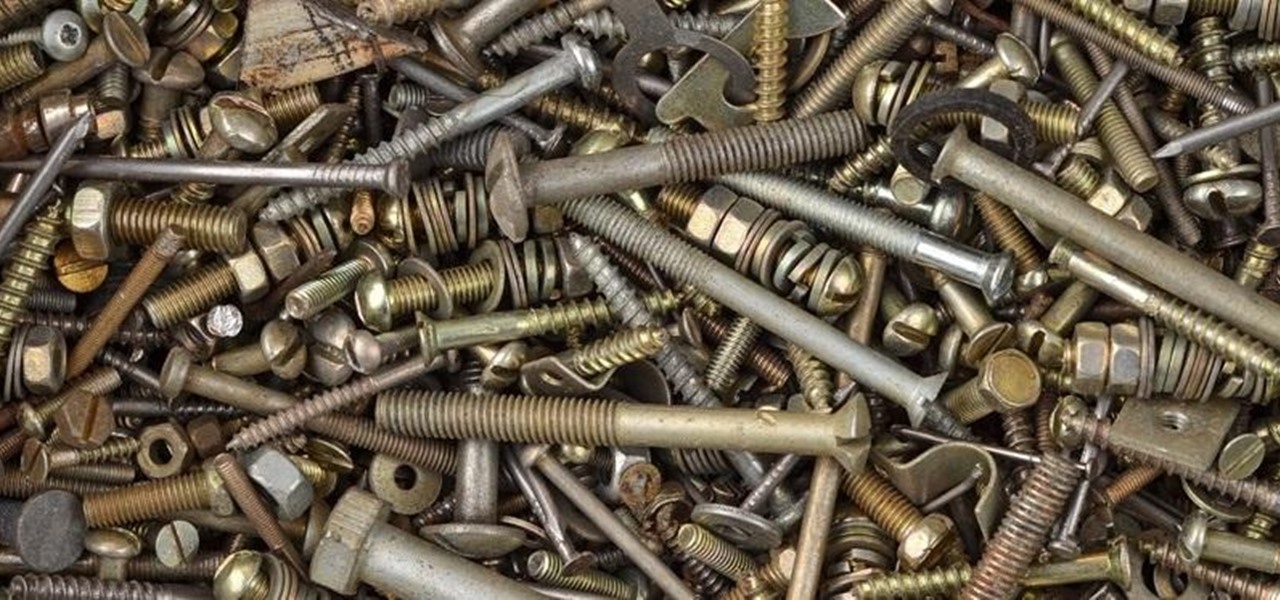
Motorcycles vibrate. It’s the nature of the beast, and with vibration come all kinds of issues. Maybe you have that one particular nut or bolt that just won’t stay tight, regardless of what you try – be it…

  • Loctite
  • washer
  • lock washer
  • serrated washer
  • lock nut
  • double nut
  • nylon insert nut
  • spring washer
  • safety wire
  • tab washers
  • or the correct torque spec.

One of the main problems on a motorcycle is none of us check our bikes often enough, and to be honest that fastener might not be easy to see, reach, touch, check or adjust. It is a rare occasion that a fastener will come loose and cause a major issue, but everyone has read about an instance that their model of motorcycle had a failure due to a bolt coming out somewhere. And if you read about another non-related bike, but again the same model and the same issue arises, do you double-check yours?

One thing every failure seems to have in common is it never appears to happen at a good time or in a great location where a fix is readily available.

On one of my bikes, there is a bolt holding the subframe to the main frame. It goes into a threaded hole and is tightened down. Logic says to add a little Loctite and it’s good. Well, it isn’t, and there are multiple instances of failure and that bolt going missing. One solution is to use a longer bolt, Loctite and then add a nylon inserted nut on the other side. This all but eliminates the problem. This is on a KTM; it vibrates and even though this nut/ bolt combination now has three forms of fixing – threaded and tightened with specific torque/ Loctite/ nylon insert nut – it can still fail.

It’s not just the KTM, though. Every bike seems to have one of those issues.

So if you are headed out on the road for a long period, say a RTW or Alaska to Ushuaia or Nordkapp to Capetown or across Russia to the Road of Bones and want to not have to worry about anything coming loose or have to carry a lot of extra hardware for ‘just in case ‘scenarios, I may have found another solution. It’s one not used on motorcycles, but the question is why not?

I will point out I am not being paid for this information, not sponsored in any way or affiliated with the company. It is just an exceptional product that a lot of companies I know of have used and since implementation had zero failures. This product is available on Amazon along with a lot of other outlets.

As a former motorcycle shop owner, motorcycle builder, mechanic, manual lathe, CNC machine operator and welder I find this another very good option for your Adventure Motorcycle arsenal of knowledge.

Watch the attached video and form your own opinion


Preventive Bike Maintenance: The Fastener Algorithm

Preventive Bike Maintenance: The Fastener Algorithm

When you ride, your motorcycle shakes. Even the smoothest running bike vibrates: it’s the nature of the beast you plan to travel on. Now add bumpy roads, and that vibration is magnified – but why should you be bothered?

Besides the welded parts (permanent fixtures) on your motorcycle, everything else is held together with a nut, bolt, or screw. In this article, let’s just call all of them ‘a fastener’.

If you look in your manual – whether it is a hard copy or an electronic version – you will find torque specifications; in Europe and other parts of the world, you will see Nm (Newton Meters). Every single nut, bolt and screw has a particular setting specified by the factory. In short, this is the tightness that a particular fastener needs to be in order to hold its item in place and not come loose.

This is all well and good; but add vibration and time, and a lot of these fasteners will slowly come loose. In addition, there is a very good chance you will not spot it until it’s too late and in some cases, the bolt or nut has long gone. If you over-tighten the fastener, it may destroy the thread rendering the fastener useless.

So, how do you stop this from happening and make your life easier?

Regardless of whether your bike is new or old, the same basic principals are at play. Make sure every fixture is checked prior to leaving: this will not only prevent fasteners from coming loose but will also potentially make your bike lighter.

Get your hands on a torque wrench. This tool is specifically designed to make your fastener adjustments exactly right, as specified in your bike manual. Using the torque wrench, you can adjust all your fasteners precisely.

Usually, you can rent a torque wrench from a part shop, or perhaps your friend can lend you one.

Checking A New Bike

You’ll need: your tool kit, a paint pen (torque paint pen, yellow or white are best for visibility) and some green, blue and purple thread locker. On a brand new bike, all your fasteners will have been specifically tightened to the correct torque amount at the factory.

Grab your pen, and start at the front of the bike. Go from the front to back, side to side and top to bottom using your paint pen. You are going to put a dab of colored paint on all your fasteners – head of a bolt for example and a line to what it is tightened down to. See below.

june-1-3-15

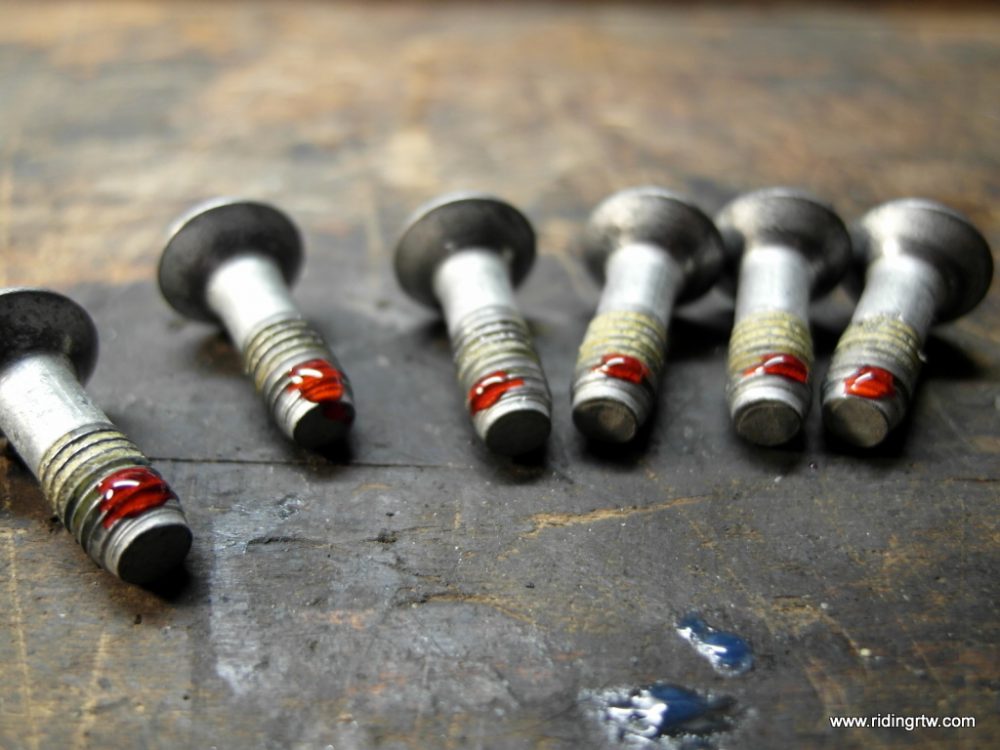
As you’re doing this, put a dab of green thread locker on that same fastener between the item and what it’s attaching to.

A good idea at this time is checking your tools. As you’re marking your bike, have your toolkit at your side. This will help you double – check that you have every tool you need on the road. Once you have used it, put it in a separate bucket. If you have a tool missing, go and get it now – from tools you already have, or maybe you need to buy it. The logic here is once you have completely gone over your bike the chances are you will have touched virtually every nut and bolt. Now, when you empty that bucket, you will have all the tools you need. This is where you get to reduce weight! If you have duplicates of a tool, get rid of them. Check if you can get lighter and smaller tools instead of the ones you have now.

Checking An Old Bike

On a used bike, you will need your tools, paint pen, green thread locker and a torque wrench.

Go from front to back, top to bottom and side-to-side on the bike, add a dab of green thread locker, torque to spec (using that torque wrench), then mark the bolt with the paint pen. If your bike is a few years old, it’s likely that the fasteners have been touched already. Don’t just adjust them – loosen them first, then torque them down. Why? Well, the previous owner or the bike shop may not have used a torque wrench and possibly over tightened those fasteners. You need to be certain, and this is the only way to be certain it is correct.

Why are the torque specifications important? Here’s mechanics’ joke about the non-mechanical people when asked – “what’s the correct torque?’ ‘About a quarter turn before it snaps!’. Can you tell the difference between 60-inch pounds and 72-inch pounds of torque? Probably not, so that’s why it’s best to know exactly where your fasteners need to be.

Now that you’ve marked all your fasteners, you will be able to tell precisely how much you need to torque them if they become lose. You will also be able to tell if a fastener is becoming lose instantly: when you fill up with gas or take a smoke break, have a snooze next to your bike. You will be able to know if anything is coming lose at a glance! And, there is the added benefit: if you have to take your bike apart, you will now know approximately what the correct setting (make the paint marks meet again) is for a torque specification without having a torque wrench if you put the same fastener back in the exact same location.

Choosing The Thread Locker

A thread locker is an adhesive applied to the threads of fasteners. It literally locks the threads together, making sure that your fasteners won’t come loose.

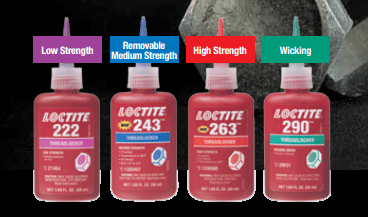
What are the different colors of thread locker, what do they mean and what do you need?

loctite-threadlockers

Here’s the information from Loctite, the thread locker manufacturer:

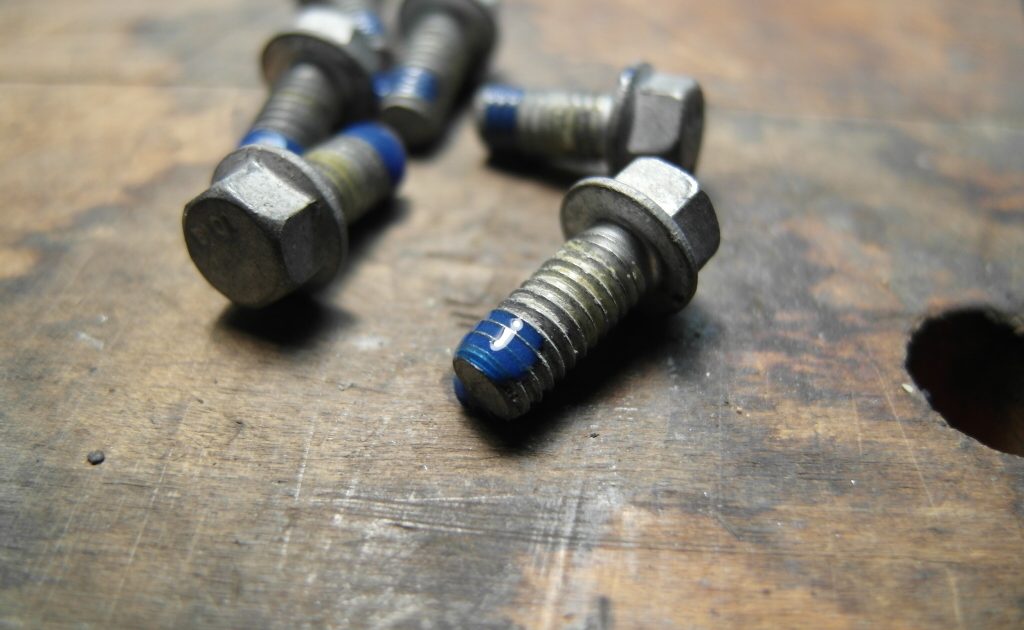
Loctite® Red Threadlocker is the highest strength. This product cures fully in 24 hours and is available in both a liquid and as a semisolid anaerobic. The red products are so powerful that they require heat to be disassembled.

Loctite® Blue Threadlocker is of medium strength. Again this product cures fully in 24 hours and can be dissembled with hand tools.

Loctite® Green Threadlocker is recommended for locking preassembled fasteners, e.g. electrical connectors and set screws. The product is categorized as medium-to-high-strength for wicking. It is also available in a liquid form, cures in 24 hours and can be removed with heat and hand tools.

Loctite® Purple Threadlocker, also known as Loctite® 222™, has become one of our most successful products. Loctite® 222™ cures in 24 hours. It can also be used on low-strength metals such as aluminum and brass.

All thread lockers have a broad temperature resistance of -65°F to 300°F, some going up to as high as 650°F.

In simple terms, the green thread locker is a wicking compound, so it will work its way down the thread and set without you having to undo the fixing. It’s perfect to use on your bike without having to undo anything. It’s your initial set up before you leave.

Purple will be for your small nuts and bolts, things like carburetor screws and bolts smaller than ¼” or 6mm, as well as any aluminum bolts going into steel threads. It’s good to have a small tube of the purple thread locker in your tool kit.

Blue will be your go – to thread locker if and when you take anything apart. Just a small dab of this is all that’s needed to hold your fasteners securely together.

Red will be used on a few internal parts that you may never see and possibly on your rear sprocket and/or brake rotors; basically, parts that need to be very secure and rarely taken off, but when they do you’ll need to apply heat beforehand. Leave the red at home.

Only a small dab of the thread locker is required: put it right at the end of the screw, and it will work its way on all the threads as you screw that fastener together. You do not need to soak the fasteners in it!

sam_8896

Did you find the article useful? Share your own bike maintenance tips in the comments below!

All You Need To Know About Tires

All You Need To Know About Tires

Tires


There is a great deal of riders hitting the road for long motorcycle trips and amazingly the line – “I have zero motorcycle knowledge” can be read very often! You don’t have to admit that you are one of those riders, just have a read, maybe learn a few things about tires that may come in useful when you are out there in the big wide world.

Do you know the correct speed and load rating for the tires on your bike when it’s fully loaded? Maybe you should, read on…


This is a re-post of an article I wrote for www.womenadvriders.com and there are a lot of other great articles on the site – check it out, it’s not just for women!


Read any magazine, blog, or forum, and you will find dozens of articles, posts, and discussions on tire choices. Along with the same debates about oil, they always seem to take a similar direction: personal opinions of what is best. Reliable, practical information can sometimes get lost in such discussions, so let’s concentrate on what could actually be useful instead.

You have a motorcycle; it has tires on already, and they are a consumable item that will need replacing sometime in the future, agreed? If you are traveling in your country, then chances are you will just get the same tire brand and model you already have if you are happy with their performance and longevity.

But what if you travel internationally? Did you know that different countries use different markings, different size references and a different way of showing load rating?

This is important stuff if you find yourself in the middle of Mongolia, Thailand or Bolivia and you do not speak the local language, or you have no internet connection to do a quick research: you need to know what you are looking at!

Before you set out on a long overland journey, do your due diligence and make a note of the information you need. Write it down somewhere in a permanent pen; inside of a pannier lid is an example I have used in the past (smartphone memos are great, but what if there is nowhere to charge it and your battery is dead?).

So, what do you need to know?

The Size of Your Rims

This is the most important factor because it will determine your tire size. Most rims have this information stamped on them – check to see if you can find it. It should show something along the lines of 21×1.60 or 18×2.15.

Speed and Load

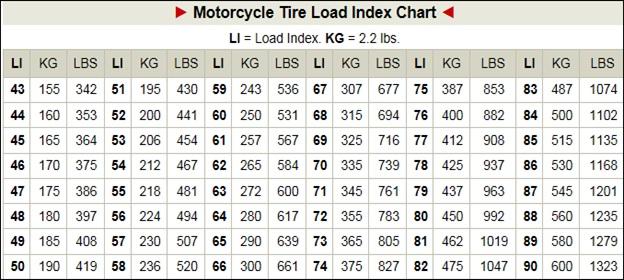
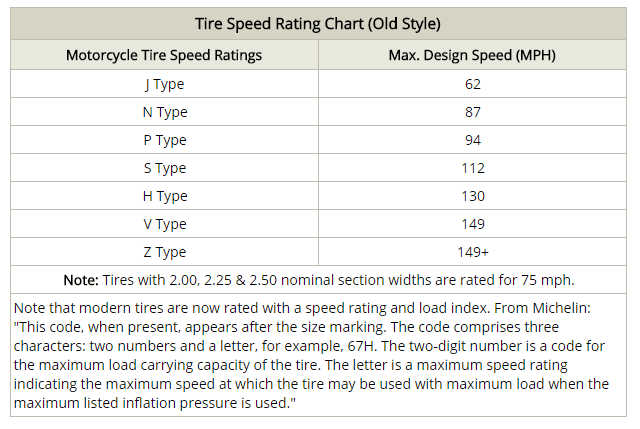
Speed and load ratings are very important numbers and letters to watch out for. Mopeds and scooters in third world countries may have the same size wheels as your KLR or F800, but at the same time, they may have a maximum speed of 45mph – so a tire rated for 60mph is good for them. You, on the other hand, will probably exceed that speed before you reach the first bend after the tire shop. Same goes for load ratings: that scooter weighs 200lbs, while your F800 weighs over 600lbs loaded with gear. This could have dire consequences, do not gamble on the wrong tire to save a few dollars, euros or Mongolian tögrög.

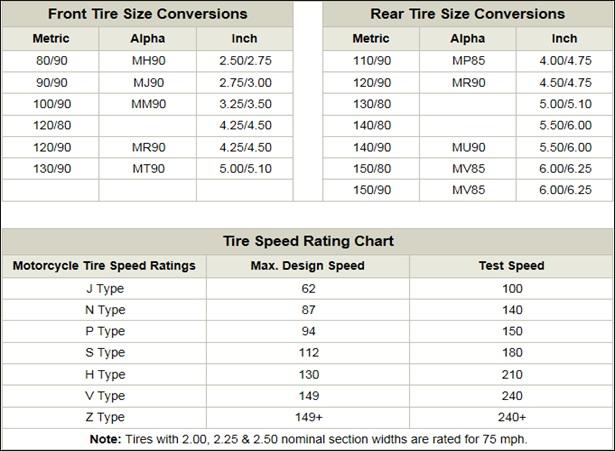
If you aren’t sure what exactly you might need, have a look at
http://www.motorcyclespecs.co.za. It has a listing for almost every modern motorcycle ever made. Tire recommendations on this website include the optimum tire size for your bike determined by the manufacturer; cross reference that with the rim and tire size data on the chart below, make a note of what you can use on the front and the rear, and you’re good to go.

Tube Choices

If you are running inner tubes, similar principal applies – you need the right inner tube according to the size of wheel and tire. Why? If you put an 18×120 inner tube in a wheel that uses an 18×140 tire, it will fit, but it will have to be pumped up past its optimum size to fill the tire carcass thus making the thickness of the inner tube thinner, which will make it significantly more prone to punctures.

Inner tubes come in an array of thicknesses. Thicker tubes (up to 4mm) are recommended for more off-road use, to withstand punctures better, and pinch flats. The trouble is, thick tubes are tough to carry as spares because of their size. In addition, fixing an extra thick tube on the trail side is not always as easy as fixing it in the comfort of your campground or hotel.

A good rule of thumb is to use them if you plan a hard off – road ride, but carry a regular thickness spare tube for a quick change if you get a flat – this way, you can fix the thick tube at a later time.

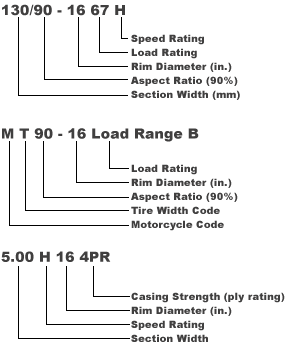
USEFUL CHARTS:

motorcycle-tire-size-conversion-chart

motorcycle-tire-load-index-chart

tire-speed-rating-old-style

motorcycle_size_chart

NOTE: ALWAYS use the exact tire size, type, speed and load rating recommended by the manufacturer of your motorcycle. Never try to second-guess the designers and engineers with regards to tire size, type, speed or load rating!

America, land of the free home of the brave – or is it…a few closing thoughts on Greece

Day #377 on the road…
We have a few miles left to ride in Greece to a ferry to leave the country.
In 3 1/2 months we rode approx 4000 miles/ 6400km all over the country and still have a little to go…
Greece is about the same size as Alabama!
[IMG]
There are a few things NOT so good about the country if you were to compare it to the US according to one site I stumbled upon…
  • be 3.8 times more likely to be unemployed
  • make 55.3% less money
  • have 12.22% less free time

but there are a lot more positives :-)

  • be 82.81% less likely to be in prison
  • spend 77.02% less money on health care
  • use 57.05% less electricity
  • consume 46.02% less oil
  • be 63.16% less likely to be murdered
  • experience 23.78% less of a class divide
  • be 22.53% less likely to die in infancy
  • be 83.33% less likely to have HIV/AIDS
  • live 0.74 years longer
  • have 34.43% fewer babies

It’s time to leave Greece, we will continue to ‘Peregrinate’. Do you ever have that, ‘Coddiwomple’ feeling?

The Greeks had a massive influence on the English language (along with Latin of course) and most of the more unusual words have all but disappeared. Maybe they need to come back and there are some great ones for travelers.

That title again, so it can be fully understood –

It’s time to leave Greece, we will continue to Peregrinate [travel or wander around from place to place].  Do you ever have that, Coddiwomple [to travel in a purposeful manner towards a vague destination], feeling?


or maybe I should have used a conglomeration of the following and used a little Greek –

  • Hodophile/s One who loves to travel. (Greek)
  • Vagary – An unpredictable instance, a wandering journey. (Latin)
  • Coddiwomple – To travel in a purposeful manner towards a vague destination. (English slang)
  • Strikhedonia – The pleasure of being able to say “to hell with it!” (Greek)
  • Eleutheromania – An intense and irresistible desire for freedom. (Greek)
  • Peregrinate – Travel or wander around from place to place. (Latin)


We have been in Greece for the last 94 days, from the very first person we spoke to, the passport control officer at the border, it has been great. His first words to us were, “welcome to Greece”, a quick look at our passports and he said, “have a good time!” This automatically gives you a good feeling as you ride onwards.

Along the way, we have met so many great people in this country and all of them have treated us like lost friends, and collectively we thank all you.

Greece seems a little off the radar for a lot of motorcycle travelers, it’s either a long ride thru the Balkans which entails buying extra insurance because the Euro Green Card doesn’t cover them, or an expensive ferry from Italy or an even longer ‘ride around’ though a selection of Eastern European countries.

For Non-European passport holders being restricted by the Schengen Agreement, it looks a little too far to go!

So when a magazine editor asked if we had any articles we would like to document and we said Greece, specifically Crete. He sounded surprised and said, “yes, we don’t get too much if anything said about Greece.” That article is here – LINK

Greece is a major summer destination and quite honestly gets very busy and maybe a little too hot for motorcycle riding for some, other riders are citing the Alps and mountain roads, good food, great scenery etc. as a better alternative. Well here’s a shocker…Greece has all of that, just schedule it a little later in the year and you can have the same twice in one year!

We arrived in mid-October and have ridden most days when we wanted to, the weather has been great, the food spectacular, the people are incredibly happy and friendly.

So as you sit at home in northern Europe or the US or Canada and wish you could go for a ride, maybe you should ship your bike here and come ride for a few months. For one thing, the Greek people would be very happy to see you, the roads are empty, the food is still great in the wintertime, accommodation is very affordable (we are paying $365 a month including utilities) and most importantly the economy needs it.

Our last week here and again we have met amazing people from the average Joe in the street to, dentists, university professors, journalists, beekeepers, shepherds, hotel owners, shop owners, mechanics and many more.

As a motorcycle rider, I am guessing you are saying, “what about the roads?” Greece as we know it hasn’t been around for that long in the grand scheme of things, but the Greek civilization basically taught the world the meaning of the word ‘ancient.’ Europe’s first advanced civilizations sprouted up in Greece around 3200 BC.

How did they get from place to place? Roads!

They are everywhere and in every type or form, any motorcycle rider who hasn’t ridden here will quickly feel like they have found motorcycle utopia. If you are on a street bike, adventure bike, dual sport or full on enduro this country has something to offer you. Amazing empty roads full of amazing switchbacks that go up and down mountain ranges for days in central Greece and on Crete – roads that will make any rider not want to stop except for fuel.

If they do look around then they would see graded tracks, a minimal amount of gates and fences, tracks that lead to the horizon and beyond, perfect for those riders with knobby tires. If you really want more extreme then there is that too, single track, goat and sheep trails heading off into the mountains to go and meet the shepherds that will greet you with a smile.


Greece you have been amazing and we thank you (ευχαριστώ/ efcharistó) and look forward to a return visit to do more exploring in the future.


Packing for 2 up riding – what do you really need to bring!!!

Packing, for reference this the bike fully loaded for two people on a multi-year RTW

  • Jesse Luggage panniers (90 liters)
  • Mosko Moto duffle (60 liters and its not even 50% full)
  • Wolfman Blackhawk tank bag (8 liters)

[IMG]

Last thing I want to be loaded like is this guy I met in NC back in 2012 and he was solo and NOT camping!!!

[IMG]

or couples riding together seems to carry even more? :lol3

Ewan and Thingy

[IMG]

S&L

[IMG]

You want to know what I carry, I want to know what they carry!!!

Our current set up

clothes quantities are pretty much the same for both of us (so just double the numbers for two people)…if at any point we need something we don’t have then we go and buy it – because there are shops in other countries. :jack

  • 3x t-shirt
  • 2x pants
  • 3x underwear
  • 3x socks
  • 1x seal skinz socks
  • 1x warm top and bottom base layers, we use Under Armor 4.0, packs to nothing, dries very quickly and is very warm
  • 1x fleece jacket
  • 1x waterproof small pack away jacket
  • 1x trainers
  • 1x flip flops
  • 1x beanie (me)
  • 1x baseball cap (me)

riding gear, there are a few differences between us

Me

  • TCX X-Desert Gore-Tex Boots
  • Klim badlands jacket
  • Klim Mojave pants
  • Goretex waterproof over pants
  • Arai XD helmet
  • Smith cycling glasses – v90
  • Thor MX gloves
  • Alpinestars winter goretex gloves
  • synthetic long sleeve UA shirt
  • Klim hydration pack

Egle

  • TCX X-Desert Gore-Tex Boots
  • REUSCH jacket
  • REUSCH pants
  • waterproof over jacket and pants
  • no name helmet
  • Seal Skinz waterproof lightweight gloves
  • Goretex winter gloves
  • synthetic long sleeve UA shirt

Gear

  • Hilleberg Anjan 3 GT – 3 person tent
  • 2x Thermarest sleeping pads
  • 1x Big Agnes King Solomon 15 deg. double sleeping bag
  • 2x Big Agnes pillows
  • 2x camping light
  • 1x Alite Monarch Butterfly Chair
  • MSR 10 liter dromedary bag
  • MSR whisper light stove – multifuel
  • Olicamp Ion Micro Titanium Stove, google it, you’ll understand why
  • large 450gm camping fuel
  • GSI 10″ fry pan
  • Sea to Summit X21 kit and additional bowl and cup
  • Sea to Summit plates x2
  • 1 liter bottle of mixed spices
  • UCO Grilliput Portable Camping Grill
  • Camping-Fire-Wind-Stopper-Break-Shield-
  • Silverware
  • Svensaw
  • Camping ax/ hammer
  • toiletries
  • clothes washing powder
  • 2x 15″ laptops
  • 2x backup hard drives
  • 2x P&S cameras
  • 1x GoPro
  • loads of go pro mounts
  • 1 big tripod
  • 1 small tripod
  • bag full of charging cables, extra batteries and chargers
  • bike cover
  • 2x extra 20 Liter waterproof bags
  • 2x backpacks
  • Antigravity Xp10
  • 4x large rock straps
  • 2x tie down straps
  • tow strap
  • air compressor
  • CO2 kit
  • hand pump
  • large first aid kit
  • spare clutch plates
  • front and rear bearings
  • drive shaft replacement seal
  • valve cover gasket
  • 1x 18″ tube
  • 2x toolkit
  • puncture kit
  • fluorescent safety jacket
  • multiple HD velcro straps

I think thats about it…it covers all weather and riding conditions in the last year hottest temp 108f/ 42c, coldest 25f/ -4f, enough equipment to camp/cook for weeks on end in any weather, fix everything but a catastrophic failure on the bike

Its funny when we get asked if we are out for a ride for the weekend because we have so little stuff and we say no we are riding RTW…the looks are priceless, then the questions start, but you don’t have…this, this, this, this etc, and when we answer yes, yes, yes, yes the look now is even better

Packing is somewhat of a learned art, I feel WE have way too much stuff and am always looking to try and reduce the volume.

If there was one tip I could give you to pack smaller/ lighter is know what you want/ need before you buy your luggage, use cardboard boxes to measure liter size then buy smaller luggage than that. The other way around if you buy the luggage you think is right and you have extra space YOU WILL FILL IT!

Al Jesse is a good friend of mine and has told me numerous times that he tries to sell smaller panniers to a lot of buyers for that very reason, they refuse and buy the biggest, usually with the same reply…”just in case!”.


Yes, you should try and go where these two guys have gone…if you know who they are, they are VERY well traveled and they could give you some amazing tips…but don’t take packing advice from them.


The question everyone wants an answer about: MONEY. How much does a RTW cost?

There a few regular questions that you get asked as a RTW rider.

What’s your favorite place or country?

Where haven’t you been yet?

How fast does your bike go?

How do you do it?

How do you afford it?

How much does it cost?

Let’s deal with that last one, how much does it cost?

Firstly I want to preface this post by saying: traveling finances are as individual as you are, no two people will ever spend identical amounts of money as no two people will ever do identical trips. Even on what is supposed to be a set track to follow like the TAT, I have never read two reports the same so it is unlikely they spent the same either…as a RTW is hugely different and potentially a lot longer thusly the costs will vary a great deal too. Therefore, this article is to give you a ‘feel’ for the expenses, take these thoughts with a pinch of salt and adjust according to your tastes.

Since early 2011, I have spent around 1000 days on the road, ridden through 44 countries, 4 continents, and crossed 86 borders, so I think I have a good feel for costs.  I will say that travel expense is a unique thing, though. One man’s comfort is another’s hardship. I don’t travel at a luxurious level but I also don’t travel scrimping and saving every single penny I can. I like to camp, I don’t love to camp or get upset if I’m not in my tent every night.

I think if I looked at myself comparing with other riders as a line depicting money spent on a graph I would be somewhere in the lower half expense wise for travelers I have met.

People have ridden RTW on less than $5,000 and I have heard and met others that have done it on more than $100,000. You need to decide where your comfort level is, what you feel like you can reasonably spend.

Using an analogy to gambling, don’t spend more than you can afford to loose, save a little cash for your eventual return because at some point it will happen. Don’t go ALL IN…THERE WILL BE AN END TO YOUR TRAVELS, whether you like it or not.

The one plan no one likes to think about is the return, have a little hidden away in a separate account for your eventual return because at some point it will happen. In my situation, I opened an investment account and bought (reasonably) secure investments for when I get back and if I’m lucky in the time I’m on the road they might make a little as well, as a long-term investment.

Most importantly, spend and budget what YOU can afford, there is a RTW for every budget and you can still come home with the feeling that you had a great time full of lifelong memories and stories to tell.

Its funny the people I meet who spend more, and I mean a lot more than me don’t always seem to have seen as much, or been as many places…do they spend the difference on beer or alcohol or cigarettes?

…and just so you know that ONE beer at the end of each day you congratulate yourself with, it will average about $3 a day, which is $1095 a year or around a month or so less travel a year.

This is my story, my version of a RTW currently in motion. I left on this RTW 365 days ago, one full year and no plans on stopping anytime soon. It included two major motorcycle shipments, no major breakdown expenses or motorcycle expenses besides tires and oil changes, 27 countries and actual distance that I rode was – 35,458 miles or 57,064 km.

Honestly, that figure surprises me, the distance covered: it doesn’t feel like I’ve ridden even a quarter of that distance which works out to average 97 miles or 156 km per day.

To put 35,458 miles into perspective, if I could ride non-stop in a straight line RTW, using an imaginary road with bridges crossing oceans, that line from Las Vegas heading eastbound would go RTW one and a half-times almost and land me in central Mongolia on the second lap.

The following is based on two people traveling on one motorcycle and doesn’t include the cost of the motorcycle or any of the gear related to travel. The bike was completely set up with all new consumables in place before mile 1 was ridden.

I estimate that the passenger adds $10-25 per day depending on the countries traveled if you are looking to calculate numbers for a solo traveler. The reason for this increased number is obviously food, but also a slight increase in fuel costs, tire wear and some hotels/ motels/ hostels/ campgrounds charge more for two people rather than one.

How do I figure a budget? Experience. I like to keep track of where the money goes and as a reminder of certain countries or certain instances, what they cost individually.

From previous experience, for this RTW I budgeted/ guesstimated costs for the Americas at $75 and Europe to be $82 a day for how I like to travel. Spoiler alert: I came in below that number.

Those costs are broken down into four major categories: FUEL – FOOD – LODGING – MISCELLANEOUS.

FUEL – Just fuel for the bike, NOTHING else.

FOOD –  This is obviously is self-explanatory. Good food, some eaten in restaurants, some roadside and some I cooked myself.

LODGING – Hotels/ motels/ hostels/ Airbnb/ Couchsurfing/ staying with friends or family/ campground/ wild camping/tent space

MISCELLANEOUS – Catch-all for expenses not covered by the other three: museums, entry fees, ferries, tolls, shipping, tires, oil changes, parts, tires, flights, replacement of broken/ lost/ stolen/ worn out items, haircuts, dentist appointments, Euro green card insurance, medical insurance, country entry fees, visas, TVIP, etc.

FUEL

One year total fuel costs – $3629.36 or 10 cents a mile/ 6 cents a km

Accurate fuel prices for the whole world can be found here and are updated daily and weekly depending on location – http://www.globalpetrolprices.com/Iran/gasoline_prices/

Highest price for fuel I paid was in Norway  – $6.70 a (US) gallon!

FOOD

One year total food costs – $7769.13 or $21.28 per day or $10.64 per person.

Most expensive country for food was Norway (surprised) averaging at least three times more than any other country.

LODGING

One year total lodging costs – $4890.76 or $22.54 per night**

**148 days of that were $0 because of Couchsurfing/ staying with friends or family/ campground/ wild camping/ tent space

Most expensive night in a hotel was in North Carolina…WTF!

MISCELLANEOUS

One year total miscellaneous – $7745.49

Shipping to Cuba and back – $2613

Shipping to Europe – $1365.68

Oil changes – $298.24

I have a reusable stainless steel oil filter, so $0 cost

Ferries, abnormal amount mainly because of Norway! $609.69

GRAND TOTAL ONE YEAR ON THE ROAD = $24,034.74 or $65.67 day avg.

The problem is that it’s not a real average for everyone because of the unique expenditures. It would be very rare that a RTW would have these large expenditures in the first 12 months – 2x shipping, and the ferry total. If we remove those it will become more realistic for most travelers.

New Total = $19,446.37 or $53.28 per day for two people

If I was solo, I could realistically deduct $10 per day (maybe more) to make the year total = $15,796.37 or $43.28 a day.

**As a side note, to show how the numbers really average out against different times for me on the road and lots of different countries, to show its not a fluke number –

When I traveled solo RTW in 2014 my total expenses including shipping from Canada to South Korea came in at $44 per day avg.

When I traveled solo from Ushuaia to Prudhoe Bay to Newfoundland to Key West, back thru Central America, to Colombia and Venezuela and back to the US  I averaged $41 per day, that’s was in 2011/ 2012

Try not to see RTW travel as a daily expense, be aware of it, but try to see how it will average out over the months or years. Learn your own spending habits, become aware of the fluctuations that can happen – a rear tire might cost a weeks expenses but it’s inevitable and a requirement to the trip. That tire you need to average out over the total amount of days since the last tire was bought, so really it’s not a one-time $300 expense it’s $3 a day over 100 days. This way you will roughly know when the next rear tire is due and plan for it accordingly and maybe if you stay in that cheaper country for an extra week/ month you can also buy that tire there cheaper as well because you got to know a shop or some local riders who will help you out?

If you can, spend more time in the cheaper countries and less time in the more expensive ones. Also, if you can head to cheaper areas first, “learn the ropes” of traveling if you’ve never really traveled for long periods of time before.

To elaborate a little…

Where do I sleep? Hotels are decent, decent enough that my mother would stay in them! Campgrounds are clean and generally have showers, washers, and dryers, hostels I get my own room, only twice in 5 years have I been in a dorm. If possible I look for a place with cooking facilities. Secure parking is always a priority so I probably pay a little more because of that.

Where do I eat? Restaurants, street vendors for fruit and vegetables, roadside, fast food, supermarket food takes the majority so I can cook my own food, I enjoy cooking and then I also know the food is cooked how I like, its fresh and cleaned properly and it saves me a lot of money, usually 50-85%.

Motorcycle knowledge and maintenance? I owned three motorcycle shops (not metric, this is all new to me) for 17 years so I work on my bike myself and if for any reason I need to take it to a shop it never leaves my sight. The only reason it would ever go to a shop is if I need a specific tool that I don’t carry due to rare use.

In Romania, I went to a shop to have a tire changed because it was included in the price. I was the one that removed and replaced my wheel, I was watching the guy change the tire to make sure it was done right and I also did a little extra maintenance while I was there too because it was a convenient time to check brake pads, cush drive rubbers, final drive wear and tear etc. So, another way to save money for sure is to know your bike and how to fix as much as you can and do the service yourself, the only area you might fail in, is having a catastrophic failure.

Before I left the shop the owner came over and offered me a job! I thought about it but declined as winter wasn’t far away and it was time to head south – but if I (you) look at it another way, I could have stayed and worked and earned some cash, doing something I enjoy to further my travels. If you have a useable skill and can get work in another country it could help extend your travels as well. It would also open you up to new experiences that may not happen otherwise…be open to change.


I was interviewed last week and asked about slow travel and why is it cheaper? I have elaborated below what I said to clarify the point a little more and show why certain people go RTW and are back in 1-3 years and others are on the road for 5, 10, 15 years with what seems like the same amount of money and are still going…its the following principal – SLOW TRAVEL!

What I said was….’the slower you travel, the further you will go, you will see more and you will have more control over your money.’

I was asked to define my statement in more detail – “how traveling slower is cheaper?”

Well, I will give you an example, right now I’m in Greece, accommodation runs around $20 -$35 per night in a hotel, mostly closer to the $30 mark. The day to day price can vary a lot depending on location, of course, if you can stay in each location longer you can get a better deal. If we were here in our current location for 1 night the price would have been $35, 3 nights it came down to $30 a night, a week it was $20 a night…we are staying a month and negotiated $11.50 a night. So based on our current location we are saving over $500 a month and probably close to that in food costs as well, because of being abe to cook every day…basically, an extra $1000 we still have in the bank.

The last place we stayed was $75 a night we negotiated it down to $17 a night with a month stay!

Now add to that if you are on the move every day you tend to eat out more than making your own food, if you are a little more stationary then its the other way around, saving you money as well.

The other thing traveling like this you will see more, a lot more – a great many travelers never figure this out for a long time or sometimes not at all, so I’ll explain why.

Take any point on any map, of any country, put a dot on it, now draw a circle with a 200-mile radius. You are staying at the ‘dot’, travel within that circle return to your cheaper lodgings each evening when you have seen everything now move 200 miles from your dot and repeat.

Think about it, really let that sink in…this is where and how you reduce your expenses!

As I say you will see more and it will cost you less by saving on accommodation and food costs and you will have the chance to meet the locals, possibly find out about places not in guide books, or on the internet, meet and ride with local riders, live like a local at their prices and see a lot more things (maybe even score some discounts) than if you simply rode thru with a final destination in mind.

“The traveler sees what he sees, the tourist sees what he has come to see” – Gilbert K. Chesterton

RTW travel looks more and more affordable, doesn’t it?

If you have read my whole ride report on ADVrider and understand what I have seen in the last year, would you think $43 a day would be worth you taking off? I think so!

If you haven’t read my Ride Report then maybe you should…my ride report is here – LINK

Questions?